Modern horizontal slat and composite fencing that will not grey out — in McAllen and across the Rio Grande Valley.
Horizontal fencing reads as new construction — long clean lines instead of vertical pickets, and it makes a yard look wider than it is. It is also less forgiving to build. Every board runs the full length of the eye, so a post that is a half-inch out is a half-inch everyone can see.
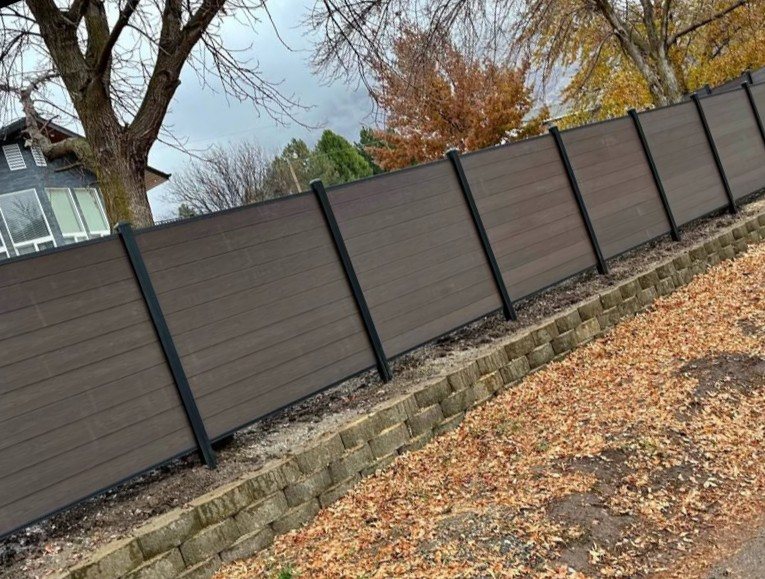
Composite goes a step further: it does not grey, does not need staining and does not feed termites, which in this climate is worth more than it sounds. It costs more at installation and nothing at all afterwards.
The reason horizontal fences fail is almost always the frame. Boards spanning a long run want to bow, so the posts need to be closer together than a vertical fence would need, and the rail behind them has to be dead straight. We set to a string line and check it before the first board goes up.
If you are choosing between wood and composite, the honest way to think about it is how much maintenance you actually want to do. Wood here needs sealing to keep its colour. Composite does not. Neither answer is wrong, but pretending you will re-seal a wood fence every two years when you know you will not is how people end up disappointed.
Slat width, gap and material decided together — they change the price and the look more than height does.
Posts closer than a vertical fence needs, set to a string line and left to cure.
Every gap the same, checked as we go rather than corrected at the end.
Down the line, from both sides, before we call it finished.
Every part of the Valley has its own soil, its own wind and its own kind of house.
We come out, measure the line and put the price in writing. No obligation.
Call (832) 549-1111